| Xinda Industrial Official Website

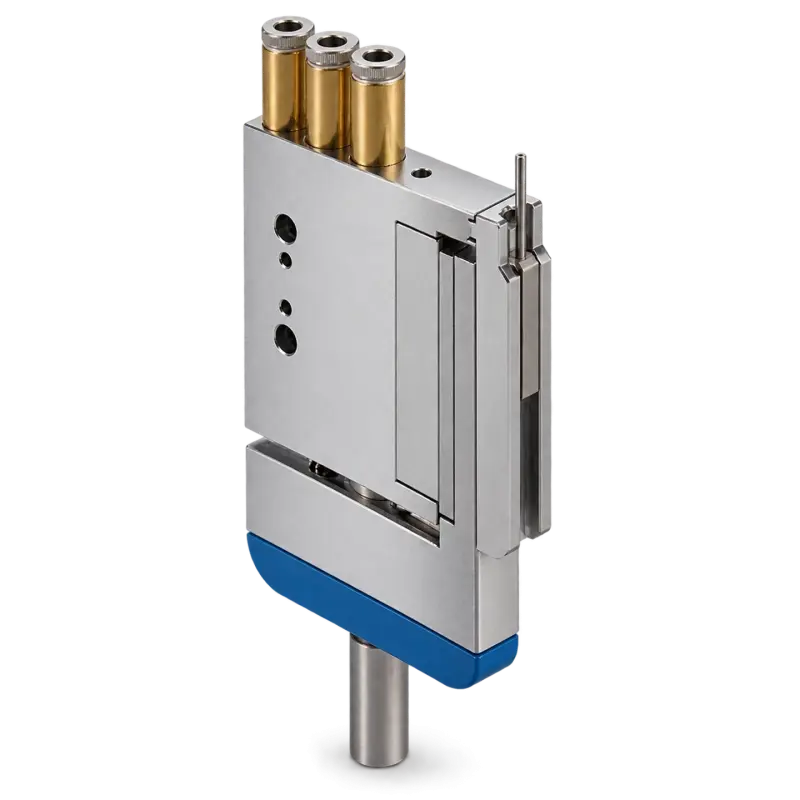
半导体专用气缸怎么选:洁净室低发尘气缸、超薄真空气缸与晶圆搬运方案产品图

How to Select Specialty Cylinders for the Semiconductor Industry: Cleanroom Low-Dust Cylinders, Ultra-Thin Vacuum Cylinders, and Wafer Handling Solutions ()

Dongguan Xinda Industrial Automation Co., Ltd. provides a collaborative scheme of ultra-thin vacuum cylinder, rotary vacuum cylinder, blade cylinder, sliding table cylinder and variable pitch module around wafer conveying, crystal fixing, scribing and sorting, probe testing, loading and unloading and clean room handling stations to solve the problems of dust generation, oil mist pollution, large jitter and suction of ordinary cylinders.

  • Brand: XINDA
  • Type: Semiconductor Industry
  • Guidance mode:
  • Drive method:
  • Surface treatment:
  • Product Features:
  • Application areas:

Dongguan Xinda Industrial Automation Co., Ltd. provides a collaborative scheme of ultra-thin vacuum cylinder, rotary vacuum cylinder, blade cylinder, sliding table cylinder and variable pitch module around wafer conveying, crystal fixing, dicing and sorting, probe testing, loading and unloading and clean room handling stations, so as to solve the semiconductor automation pain points such as dust generation, oil mist pollution, large beating, unstable suction sheet, etc.

Low dust generation
Clean room adaptation
±0.02mm
Repeat positioning reference
oil-free lubrication
Low precipitation seal
Vacuum adsorption
Wafer lossless pick and place
01

Special cylinder for semiconductordefinition and principle

The special cylinder for semiconductor is a pneumatic actuator for semiconductor manufacturing equipment and high clean automation scenarios. Its core function is to complete the auxiliary actions of transferring, clamping, lifting, alignment and detection of wafers, substrates, crystal boats and flower baskets in a limited space, while minimizing the impact of particle release, oil mist pollution and exhaust disturbance on the process environment. The difference between it and ordinary industrial cylinders is not in "whether it can be extended or retracted", but in clean design: the material, sealing, lubrication, exhaust and guidance must be re-checked according to the clean room level.

The typical structure consists of a cylinder, a piston, a guide mechanism, a sealing assembly, a magnetic switch or position detection, an air port and a mounting surface. Semiconductor stations are often equipped with double-acting structures to ensure round-trip stability. If adsorption is performed, vacuum suction nozzle, vacuum generator and buffer throttling will be integrated at the cylinder body or sliding table end. If variable pitch handling is performed, the variable pitch module synchronously drives multiple groups of cylinders or suction nozzles to complete pitch conversion.

02

Clean room cylinder core requirements

Low dust design

Low wear seal pair and smooth exposed surface are adopted to reduce the particles generated by the friction of the piston rod dust ring and guide rail.

oil-free lubrication

Pre-lubricated or PTFE self-lubricating seal in the factory, no external oil mist device, to avoid oil mist falling on the surface of the wafer and optical parts.

Stainless steel material

SUS304/316 or hard coating shall be preferred for cylinder barrel and piston rod; the material for exposed area of the product shall be selected according to the frequency of chemical cleaning.

Exhaust treatment

The cleaning station can be equipped with an external exhaust port or a centralized exhaust pipe, so that the cylinder exhaust is not directly blown to the wafer flow path.

High Repetitive Positioning

Equipped with precision guide rail, magnetic induction switch or grating feedback; Xinda homologous pitch change scheme can be repeatedly positioned according to the requirements of ± 0.02mm.

low vibration soft landing

Throttling buffer, low-speed overflow or external buffer reduces the risk of wafer edge damage by impact.

ProjectOrdinary cylinderSemiconductor clean cylinder
Lubrication methodCan be connected to oil mist lubricationOil-free/pre-lubricated low precipitation
Sealing materialNBR General Purpose SealPTFE, low VOC, fluorine rubber as needed
MaterialAluminum Alloy/Ordinary SteelStainless steel cylinder, hard piston rod
ExhaustDirect OutflowExternal exhaust or centralized treatment
Applicable EnvironmentGeneral Industrial AutomationISO Class Cleanroom, Wafer Handling

The above table is a general selection comparison, which is not equivalent to the unified specification of a single product. The final inspection report of cleanliness grade, contact chemicals and factory particles shall prevail.

03

Xinda Semiconductor Station Cylinder Series

Xinda has introduced core transmission technology from Japan and Germany since 2000. Its products cover precision variable pitch sliding table, variable pitch module, integrated micro sliding table, blade cylinder, ultra-thin vacuum cylinder, rotary vacuum cylinder, sliding table cylinder and air source processing parts. The semiconductor scene is usually not a single bare cylinder, but a "cylinder-oriented vacuum adsorption pitch mechanism" to form a pick-and-place unit.

Ultra-thin vacuum cylinder

Cylinder thin, integrated vacuum nozzle, suitable for wafer ring, chip, glass substrate non-destructive suction.

rotary vacuum cylinder

Adsorption at the same time do flip/attitude correction, suitable for solid crystal feeding, flower basket distance change, clean room transport.

Blade cylinder

The ultra-thin body is used for narrow-slit pushing, blocking and dicing auxiliary positioning. The combination with the sliding table can be synchronized with multiple stations.

sliding table cylinder

With linear guide, resistance to a certain lateral force; suitable for short-stroke pressing, alignment, probe table light pressure contact.

Variable pitch module collaboration

Multi-station equidistant/unequal distance opening and closing, the close-packed wafer ring is expanded to the process spacing, and then handed over to the vacuum cylinder for picking.

Non-standard customization

According to the stroke, cylinder diameter, installation direction, vacuum interface, magnetic opening position and cleaning requirements, drawing and proofing.

04

Typical Application Scenarios

Wafer handling

FOUP loading/unloading, boat transfer, and vertical alignment; requirements include smooth operation with no impact, controllable thrust, and low particle generation.

Sorting after zoning

Blade cylinders assist in wafer dicing, while vacuum cylinders pick up the wafers and place them into trays; a variable-pitch module adjusts the spacing.

Die attachment and mounting

A rotary vacuum cylinder flips the workpiece, while a slide cylinder applies light pressure for alignment; repeat positioning accuracy is verified to within ±0.02 mm.

Probe testing

The test station employs light-contact pressing and low-force loading to prevent vibrations from causing contact instability.

Photolithography assistive mechanism

Mask handling, protective doors, and locking blocks can be actuated by cleanroom-compatible slide cylinders, ensuring low vibration that does not disturb the optical path.

SMT/Electronic Cleanroom Line

PCB and FPC positioning tests, material tray pitch adjustment; blade cylinder pitch-adjustment module enhances cycle time.

Common configurations of semiconductor handling units:The servo‑controlled pitch‑adjustment module provides multi‑station spacing; a slide‑table cylinder or blade cylinder performs Z‑axis motion/push‑cutting; an ultra‑thin vacuum cylinder picks up the wafer; a magnetic proximity switch confirms proper positioning; and a flow control valve regulates speed to ensure a soft landing. A standard cylinder is only responsible for “motion,” whereas a semiconductor-grade cylinder must also ensure “no dust, no oil mist, and no wafer damage.”

05

Selection formulas and installation specifications

Semiconductor cylinder selection sequence:① Determine the cleanliness class (ISO Class) and whether the area is a product-exposure zone; ② Calculate the load (total weight of wafers, nozzles, and fixtures) to select the cylinder bore size; ③ Specify the stroke and available installation space; for narrow spaces, prioritize ultra-thin or blade-type cylinders; ④ Equip the vacuum‑suction station with a vacuum generator and an anti‑drop vacuum valve; ⑤ For heavy loads, choose a slide‑mounted cylinder or add guide rods; ⑥ Use flow control valves to regulate low speeds and incorporate cushioning to prevent impact; ⑦ Require the manufacturer to provide material certificates, salt‑spray and particle‑count test reports, and repeat‑positioning accuracy reports.

  • Wafer-type loads are light but must not be subjected to impact: there is no need to blindly increase the cylinder bore; the focus should be on low starting force and smooth operation.

  • Vacuum cylinder for wafer handling: The nozzle material, vacuum level, and venting time must be matched to the wafer diameter and surface characteristics to prevent slippage or marking.

  • Retrofitting oil mist lubricators on clean workstations is prohibited; disassembly and maintenance of oil-free pre-lubricated cylinders must be performed using dust-free gloves.

  • The piston rod should avoid being subjected to lateral forces on one side for extended periods; otherwise, the guide sleeve will experience uneven wear and generate dust.

  • The external exhaust port shall be connected via a dedicated pipe and shall not share an exhaust line with other valve ports.

  • Before procuring semiconductor equipment in bulk, it is recommended to conduct sample testing to verify cleanroom compatibility and perform high-frequency life-cycle tests.

06

Xinda's Quality Control and Delivery Capabilities

Dongguan Xinda Industrial Automation Co., Ltd. has established a comprehensive production process that spans from raw material inspection and CNC machining to assembly, commissioning, and factory‑level testing, supported by precision testing equipment. Approximately 60% of its workforce comprises R&D personnel. Its products are applied in fields such as 3C electronics, semiconductors, new‑energy batteries, medical devices, and packaging machinery, and are exported to Taiwan, South Korea, Germany, and Southeast Asia.

Semiconductor-related actuator components can be delivered as variable‑pitch module–cylinder assemblies: ultra‑thin vacuum cylinders, rotary vacuum cylinders, blade cylinders, and slide cylinders can all be customized according to stroke, bore diameter, mounting surface, magnetic switch position, vacuum port, and non‑standard housing dimensions; the variable‑pitch end can be configured based on the number of stations, center distance, and whether the arrangement is equidistant or non‑equidistant. For delivery, please request documentation on repeat positioning accuracy testing, seal material specifications, oil-free lubrication details, and cleanroom compatibility verification. The specific cleanliness class shall be determined according to project requirements and sample validation.

Company Name

DONGGUAN XINDA INDUSTRIAL AUTOMATION CO., LTD

Official website

www.xdeoat.com

Business Contact

Ms. Ming: 1368628662

©2026 Dongguan Xinda Industrial Automation Co., Ltd. All rights reserved

Get model guidelines

mm
This model length limit mm
扫码添加微信获取
Scan Code Add WeChat Acquisition
Ask for our 3D selection package
  • Download the correct 3D mapPlease refer to the schematic diagram of suspension size and load selection according to the following figure.
  • When downloading 3D models through big country craftsmen or our 3D download package,Please refer to the prompt chart for input parameters.And the right side of the note prompt input corresponding technical parameters.
电机位置
悬挂尺寸
选型参考
① - 21② - 100③ - 4④ - M⑤ - TR1⑥ - S⑦ - N⑧ - L⑨
① Series
② Minimum center spacing
21mm
③ Maximum center spacing
22-100mm optional
④ Number of stations
3
⑤ Variable distance origin
Center/left/right pitch
⑥ Motor position
Refer to the motor location map
⑦ Motor type
Servo/Step/None
⑧ Switch signal
NPN/PNP
⑨ Module installation direction
T Lifting/D Pad/L Side Mount
Selection tips: Selection Reference "Load Selection Diagram (View)"If you do not know how to select a type, please refer to page P09 of our company's data to inform us of the variable pitch form and provide page P11."Synchronous Variable Pitch Module Design Selection Table (Download)", fill in the technical information marked with red dot and send it to our company. Please according to the actual application scenario, load requirements and installation space, combined with the above parameters for reasonable selection. If there are special requirements, it is recommended to contact technical support for confirmation to ensure the performance and stability of the equipment.
1

Brief Introduction of Variable Pitch Slide

The synchronous variable pitch sliding table is also called the synchronous variable pitch mechanism, which is a kind of module. The number of variable pitch sliders shall not be less than 2, and the positive and negative rotation of the driving shaft shall control multiple sliders to move linearly on the guide rail.

The form of variable distance can be divided:synchronous equidistant pitchandSynchronous unequal pitch changeThe movement mode can be divided into: intermediate positioning synchronous variable distance, unilateral positioning synchronous variable distance and irregular synchronous variable distance.

The driving shaft can only rotate forward and reverse within the angle marked by the sliding table, and the pitch mechanism will be directly damaged if it exceeds the set angle range.

2

Application fields

The variable-pitch sliding table is equipped with a manipulator or a vacuum suction cup, which can grab multiple workpieces from the sorting tray at a fixed distance and place them at a variable distance, which is used for variable-pitch handling operations in automated production.

It is widely used in automation 3C, semiconductor, electronics, medical, packaging machine, dispensing machine, new energy vehicle battery assembly, daily necessities manipulator grab and other industries.

3

advantages and characteristics

  1. Microstructures:Small size, light weight, small space variable distance handling operations.
  2. Synchronized isometric operation:Within the range of pitch set by the multi-station pitch-changing sliding table, it can realize the high-speed and arbitrary pitch-taking operation of multiple sliding tables.
  3. Synchronized unequal-distance jobs:It can realize synchronous positioning and variable distance from the positioning point to the eccentric point, synchronous positioning and variable distance from the positioning point to the unilateral side, and synchronous variable distance without equidistance.
  4. High Precision Design:The synchronous variable pitch sliding table mechanism design is rigorous, high precision, long practical life, accurate, high-speed, positioning and handling operations, can save time and improve work efficiency.
  5. Easy to operate:Variable pitch operation is simple and convenient.
  6. Flexible customization:The variable pitch model has variable pitch screw, variable pitch, and a variety of sliders can be selected. The variable pitch form can be customized according to requirements. If the shape or slider size is changed, the delivery period will be extended.
High precision miniaturization High efficiency Customization
4

Variable pitch module considerations

  1. This mechanism can only be used horizontally, not vertically.
  2. Do not exceed the maximum and minimum spacing of the variable pitch, which will damage the mechanism.
  3. The rotation angle of the driving shaft shall not exceed the angle range specified by the variable pitch sliding table.
  4. In order to avoid damage to the slider module due to impact, please do not install parts on the slider that hinder the operation of the slider.
  5. Refer to the recommended torque parameters, please select the appropriate motor.
  6. Please install the variable pitch slide on the rigid mechanism.
  7. The spacing between each slider is always changing, and sliders cannot be run alone.

Variable pitch module equipment schematic diagram

Variable pitch module equipment diagram in practical application

Schematic diagram of equipment structure

Show the internal structure and component layout of the variable pitch module

Application of automated production line

Application Scenario of Variable Distance Module in Automatic Production Line

Application Scenario Display

Practical Application of Variable Distance Module in 3C Electronic Industry

Schematic diagram of structural details

Key structural details of the variable pitch module

Structural detail analysis

Detailed structure and working principle of key components

Schematic diagram of working principle

Workflow and principle of variable pitch module

Working principle display

Flow diagram of synchronous variable pitch work

1. Synchronized equidistant pitch

分中同步等距变距

2. Unilateral synchronous equidistant pitch

单边同步等距变距

3. Synchronous equidistant multi-segment fixed distance variable pitch

同步等距多段定距变距

4. Unequal distance fixed distance synchronous variable pitch

不等距定距同步变距

5. The whole group of mover is synchronized and equidistant from left to right

整组动子从左向右同步等距变距

6. Synchronize pitch change after the whole group of mover translates

整组动子平移后再同步变距

7. Synchronize pitch change after the whole group of mover translates

整组动子平移后再同步变距

8. Parametric multi-station equidistant or unequal pitch at any point

任意点参数化多工位等距或不等距变距
Scan the QR code to add WeChat.
One-on-one exclusive service
Click the button below to contact us directly via WhatsApp, and we will get back to you as soon as possible.
Start a conversation
Online Customer Service
● Online now
Online Customer Service
We will reply to you as soon as possible.
Hello! Welcome to consult ~
To contact us quickly, please call:
13686286625(WeChat number is the same)

You can also click the button below to open the customer service chat window directly.